Restrooms in busy facilities go through supplies quickly. When dispensers fail during peak hours, it creates real problems. Soap units jam, paper towel holders run empty, and pumps break down under constant use.
This frustrates users and creates extra work for maintenance staff who already have full schedules.
Commercial dispensers control how soap, paper products, and cleaning chemicals get distributed throughout shared spaces. When these systems work reliably, they reduce waste, maintain hygiene standards, and keep restrooms functioning smoothly in offices, restaurants, healthcare facilities, and industrial buildings across the USA and abroad.
Different facilities need different dispensing solutions based on their unique requirements. Understanding the main categories available helps you choose systems that actually match your environment and daily usage patterns.
Air care dispensers maintain fresh-smelling restrooms and common areas without requiring manual intervention. These are timed aerosol systems that release fragrance at set intervals throughout the day, while passive units provide continuous odor control in the background. High-traffic restrooms benefit most from such programmable dispensers that can adjust their output based on peak usage times.
Soap and sanitizer dispensers form the foundation of hand hygiene in any commercial facility. There are multiple dispenser types available for soap and sanitizer to choose from based on your usage and budget.
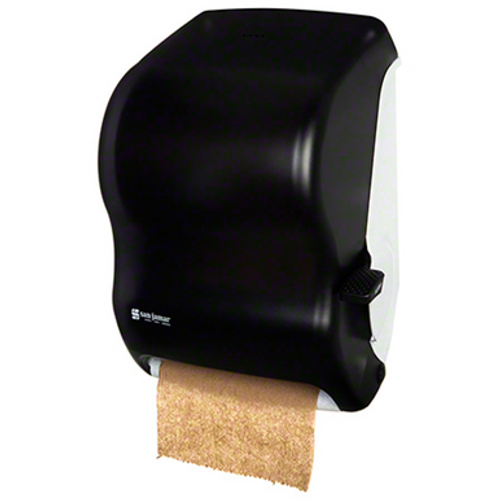
Paper dispensers manage towels, napkins, and tissue efficiently throughout your facility. Choosing the right system depends heavily on your specific location requirements and typical traffic patterns.
Chemical dispensers help janitorial teams dilute concentrated cleaning products to the correct strength consistently. Wall-mounted systems control dilution ratios automatically, which means fill bottles get the right concentration every single time without staff needing to guess or measure manually.
This consistency not only improves cleaning results across your facility but also reduces chemical costs substantially in buildings that go through dozens of bottles weekly. Proper dilution also prevents costly product waste, protects surfaces from potential damage caused by overly strong solutions, and keeps custodial staff safer by eliminating the need to handle full-strength chemicals directly.
The choice between touchless and manual dispensers really depends on your facility's specific operational needs and hygiene priorities.
Touchless Dispensers:
Manual Dispensers:
Touchless dispensers are a good fit for places where cleanliness can’t be compromised. Hospitals, clinics, commercial kitchens, and busy public restrooms fall into this category. Since people don’t have to touch anything, there’s less chance of germs spreading during the day.
Manual dispensers are simple, affordable, and dependable. They’re cheaper to install, don’t use batteries, and are easier to fix if something goes wrong. For employee-only restrooms, small offices, or low-traffic areas, they usually make more sense and get the job done without fuss.
Most facilities don’t choose one over the other. They use a mix of both manual and touchless dispensers.
For example, touchless dispensers are used in public and high-visibility areas where hygiene matters most, while installing manual dispensers in staff areas where usage is lighter, and maintenance needs to stay minimal.
Selecting commercial dispensers for your facility requires balancing several practical considerations:
Overall, you can match your dispenser capacity to your actual restocking schedule instead of overestimating what staff can manage.
Restroom dispensers in high-traffic areas need larger units that can go longer between refills without running empty. In smaller spaces with genuinely lighter use, smaller and more economical models make more sense since they cost less upfront and take up less wall space.
ProStar offers a comprehensive selection of commercial dispensers designed for reliability in high-traffic environments. Our range of products includes everything from soap and sanitizer systems to paper dispensers, air care units, and chemical dilution equipment.
Each product is selected for durability and consistent performance in demanding commercial settings.
We understand that facilities have different requirements. That's why our collection includes both touchless and manual options across all dispenser categories, allowing you to match technology to your specific hygiene standards and budget.
Explore more of our facility solutions:
Cleaning Supplies | Restroom Supplies | Safety Equipment | Gloves | Receptacles/Trash Bins | Dispensers
Browse the complete collection at ProStar to find everything your facility needs in one place.
You can install touchless dispensers in customer restrooms and food prep areas where hygiene and health codes matter most. And use manual dispensers in employee break rooms and back-of-house areas to control costs while maintaining functionality.
Yes. Foaming soap dispensers use about 30–40% less soap per wash. While upfront costs are slightly higher, high-volume facilities usually see savings within a few months through reduced soap usage.
You can choose a paper towel dispenser based on daily traffic. Restrooms serving 100+ users need high-capacity units like 800-foot rolls. Same way, smaller offices with 20–30 users can use 400-foot dispensers.
No. Automatic dispensers require soap with a specific viscosity. Using incompatible soap can cause clogs or sensor issues. Always confirm manufacturer compatibility before refilling. Explore our range of hand soaps and hand sanitizers at ProStar to find a compatible one.
You can inspect commercial dispensers weekly in high-traffic areas. Clean sensor windows monthly, replace batteries every 3–6 months, and deep clean quarterly to prevent buildup under your dispensers.
Commercial dispensers are built with heavier materials, larger capacities, and bulk refill support for constant use. Residential dispensers are lighter and not designed for high-traffic environments.