

-

-
-

-
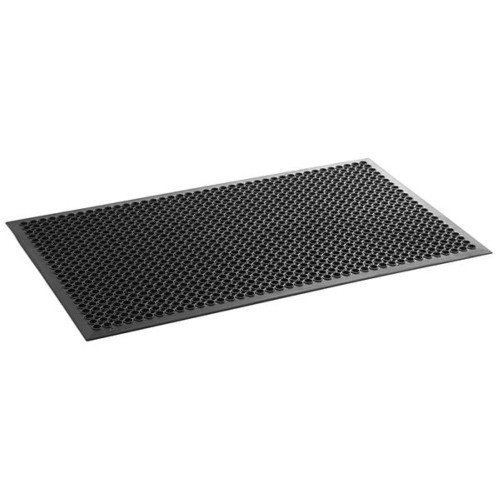
Floor Mat 3' x 5' Black Rubber Anti-Fatigue with Beveled Edge - 1/2" Thick
Product ID: 207844
In stock -
-

-

Standing on hard concrete floors for 8-hour shifts takes a toll on workers' feet, legs, and backs. By midday, fatigue sets in, productivity drops, and employees start looking for excuses to sit down. The pain doesn't stop at closing time either. This results in chronic foot and joint problems developing over time when workers spend entire shifts on unforgiving surfaces.
An anti-fatigue mat addresses this problem by providing cushioned surfaces that reduce impact on joints and encourage subtle leg movements. These mats help maintain blood circulation during long periods of standing, which reduces the stiffness and discomfort that comes from staying stationary on hard floors. Manufacturing facilities, retail checkout counters, commercial kitchens, and assembly lines all see measurable improvements in worker comfort and fewer complaints after installing a proper mat at stationary work positions.
Different facilities need different matting solutions based on their unique requirements.
Understanding the main categories available helps you choose mats that actually match your environment and daily usage patterns.
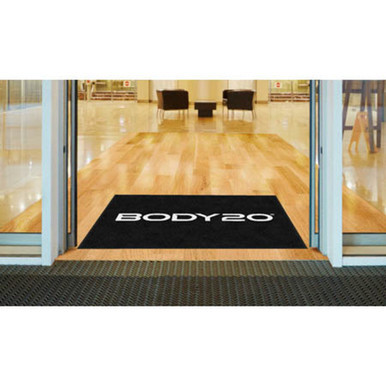
Indoor mats serve multiple functions across commercial and industrial facilities. Building entrances need heavy-duty scraper mats that trap dirt and moisture before it spreads throughout your space. A quality commercial entrance mat in a 4x6 size handles high foot traffic without flattening, saving money on floor maintenance by catching debris at the door.
Ergonomic mats with anti-fatigue properties provide cushioning for employees at stationary positions like reception desks, retail registers, and security stations. These commercial floor mats reduce leg and back strain during long shifts while maintaining a professional appearance in customer-facing areas.
Specialty mats provide enhanced performance beyond standard entrance matting. These rubber mats offer superior cushioning and water absorption capacity for high-moisture environments where standard mats saturate quickly.
Enhanced absorption with these anti-slip mats prevents water pooling in pool areas, locker rooms, and shower entrances where heavy water traffic creates slip hazards. Also, the improved cushioning of these rubber mats reduces fatigue for staff and users in areas with extended standing periods.
Urinal floor mats control odors and protect restroom flooring from the damaging effects of uric acid. These urinal floor mats cost far less than constantly refinishing stained floors in high-use restrooms. The disposable versions make these urinal floor mats easy for maintenance. All this urinal mat requires is replacing it monthly rather than scrubbing floors weekly. The mats contain antimicrobial agents that reduce bacterial growth, keeping restrooms fresher between cleanings.
Selecting anti-fatigue mats for your facility requires balancing several practical considerations:
Matching mat thickness to actual standing duration rather than assuming thickness is always better. Overly soft mats create instability and increase trip hazards at edges.
ProStar offers a comprehensive selection of anti-fatigue mats and mat solutions for demanding industrial and commercial environments. Our range of commercial floor mats covers everything from basic standing comfort to specialized applications requiring chemical resistance, static dissipation, or extreme temperature tolerance.
We understand that facilities have different requirements. Our collection of anti-fatigue and anti-slip mats include options for dry manufacturing environments, wet food service areas, static-sensitive electronics assembly, and outdoor industrial applications. Whether you need simple cushioning or industrial-grade mats meeting OSHA regulations, our selection offers solutions that perform in real-world conditions.
Explore more of our facility solutions:
Cleaning Supplies | Restroom Supplies | Safety Equipment | Gloves | Receptacles/Trash Bins | Dispensers
Browse the complete collection at ProStar to find everything your facility needs in one place.
For 8+ hour shifts, use anti-fatigue mats between 5/8" and 3/4" thick. Thinner mats compress too much under prolonged weight, while anything over 1" can become unstable and create tripping hazards on commercial floor mat installations.
Yes. Studies show reduced lower back pain and leg fatigue in workers using ergonomic mats compared to standing on concrete. The cushioning in anti-fatigue mats encourages subtle leg muscle movement, which improves circulation during long-standing periods at standing workstations.
Rubber anti-slip mats with drainage holes work best in kitchens. These industrial floor mats handle grease and water better than foam, resist common kitchen chemicals, and perform reliably in wet conditions. Look for anti-fatigue mats for restaurants and kitchens that are rated for food service use.
Choose rubber mats with textured or gripper-style undersides designed to hold on smooth surfaces. On highly polished floors, double-sided carpet tape at the corners can help. Beveled edges on indoor mats also reduce movement while minimizing trip risks.
Most vinyl and rubber mats can be trimmed using a utility knife and a straight edge. Allow the mat to acclimate to room temperature first for cleaner cuts. Foam-based anti-fatigue mats are harder to cut accurately without specialized tools.
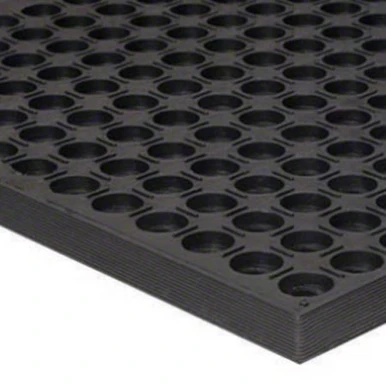
Mats designed for wet areas feature drainage holes that prevent liquid buildup and maintain traction. These industrial floor mats are typically made from rubber materials that resist moisture and grease. Dry-area anti-fatigue mats use solid surfaces to provide maximum cushioning where drainage is not required.
Product ID: 207844